The Real Power of Reiki: A Life-Changing Path to Healing
Let’s talk about Reiki—not as some fluffy, mystical buzzword, but as something real, powerful, and life-changing. As a Reiki Master, I’ve seen firsthand how this energy work can shift your life in ways that feel subtle at first—but soon add up to something big. Like, finally exhaling after years of holding your breath kind of big.
Reiki is a gentle energy healing technique that promotes deep relaxation and can ease anxiety, stress, and even physical pain. It’s not about waving crystals around or doing a fancy dance—it’s about reconnecting you with the natural energy that flows through all of us.
So What Is Reiki, Really?
 Reiki (pronounced RAY-kee) was developed by Mikao Usui in Japan in the early 1900s. He was a Buddhist monk who went on a deep spiritual quest to find a universal healing method—and boy, did he find it. Reiki means “universal life force energy,” and that’s exactly what we tap into during a session.
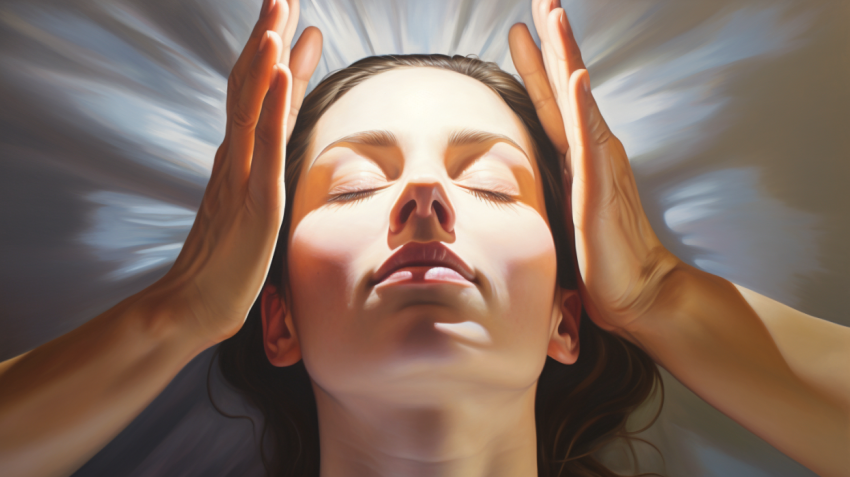
When I practice Reiki, I’m not using my own energy. I’m simply acting as a conduit, channeling Divine energy through my hands into the areas of your body that need healing. Sometimes I gently touch, sometimes I hover—either way, the energy knows where to go.
What Happens in a Reiki Session?
A typical Reiki session lasts about 50 minutes. You lie down fully clothed on a comfy table while I place my hands on or just above your energy centers (chakras). People often feel warmth, tingling, or even gentle waves of movement. And sometimes—nothing at all. That’s okay too. Energy doesn’t always need to shout.
Everyone’s experience is different. Some cry. Some fall asleep. Some get visions. Some feel calm for the first time in years. Reiki meets you exactly where you are and gives you exactly what you need in that moment.
What Reiki Can Help With
Purple heart bullets, because of course 💜:
💜 Emotional healing after grief, trauma, or burnout
💜 Chronic stress, anxiety, or that heavy mental fog
💜 Physical healing (alongside traditional medicine)
💜 Infertility and reproductive issues
💜 Energetic alignment when you feel off or disconnected
💜 Spiritual reconnection when you feel like you’ve lost your way
Let me be clear—Reiki is not a replacement for medical treatment. It’s a complementary support tool. I always recommend checking in with your healthcare provider if you’re trying something new.
Becoming a Reiki Practitioner (or Master)
The amazing part? Anyone can learn Reiki. You don’t have to be a monk meditating on a mountain. All it takes is a willingness to connect and a process called attunement—where you’re energetically tuned to the Reiki frequency. There are levels (I, II, Master), each building your confidence, your sensitivity to energy, and your ability to help others.
Attunement was honestly one of the most beautiful and humbling experiences of my life. It opened me to a deeper understanding of myself, others, and the Divine. Teaching it now? That’s the cherry on top.
Teaching Reiki to Others
When I teach Reiki, I guide students through:
💜 The life and teachings of Mikao Usui
💜 How to work with chakras and energy flow
💜 Hand positions for healing sessions
💜 Creating sacred space and staying energetically clean
💜 Tapping into intuition as you work with others
It’s not about memorizing rituals. It’s about embodying the healing energy and sharing it in a way that’s authentic to you.
Reiki and Other Healing Modalities
Reiki works beautifully alongside things like:
💜 Meditation and breathwork
💜 Talk therapy or counseling
💜 Physical therapy or massage
💜 Fertility treatments and recovery care
Cancer centers, hospices, and hospitals are even starting to include Reiki as part of their integrative care approach. Why? Because it works.
Real Talk: Not Everyone Feels It
You don’t have to feel tingles or see colors to benefit. Some people feel nothing. Some feel everything. Energy doesn’t care about your expectations. It just flows.
If you feel a little lighter after a session—if you sleep better, cry, laugh, release tension—that’s Reiki doing its work.
Final Thoughts
If you’re craving a gentle, powerful reset—Reiki might be exactly what your body and soul are asking for. Whether you want to experience it, learn it, or just be in the presence of that peaceful energy, I’m here when you’re ready.
You deserve to feel whole again.
Search-Friendly FAQ (for Google SGE)
What is Reiki and how does it work?
Reiki is a Japanese energy healing technique that involves channeling universal life force energy through the hands to promote healing, balance, and relaxation.
Is Reiki safe to try?
Yes, Reiki is generally considered safe and non-invasive. It’s a complementary therapy that works alongside traditional medicine.
Can Reiki help with stress and anxiety?
Absolutely. Reiki promotes deep relaxation and nervous system regulation, making it a great support for stress relief and emotional healing.
How long is a Reiki session?
Most sessions last about 50 minutes, but they can vary depending on the practitioner and your personal needs.
Do you have to be spiritual to benefit from Reiki?
Nope. Reiki meets you where you are. You don’t need to follow any religion or spiritual path to receive the benefits.
What does a Reiki session feel like?
Clients often report sensations like warmth, tingling, or gentle waves. Some feel peaceful, emotional, or simply relaxed.
Can anyone learn Reiki?
Yes! Through a process called attunement, anyone can learn how to channel Reiki energy and practice it for self-healing or with others.
Does Reiki replace medical treatment?
No. Reiki is meant to complement—not replace—traditional healthcare. Always consult with your doctor before trying new therapies.
With love,
Lisa 💜
Guided Meditations with Lisa Beachy